

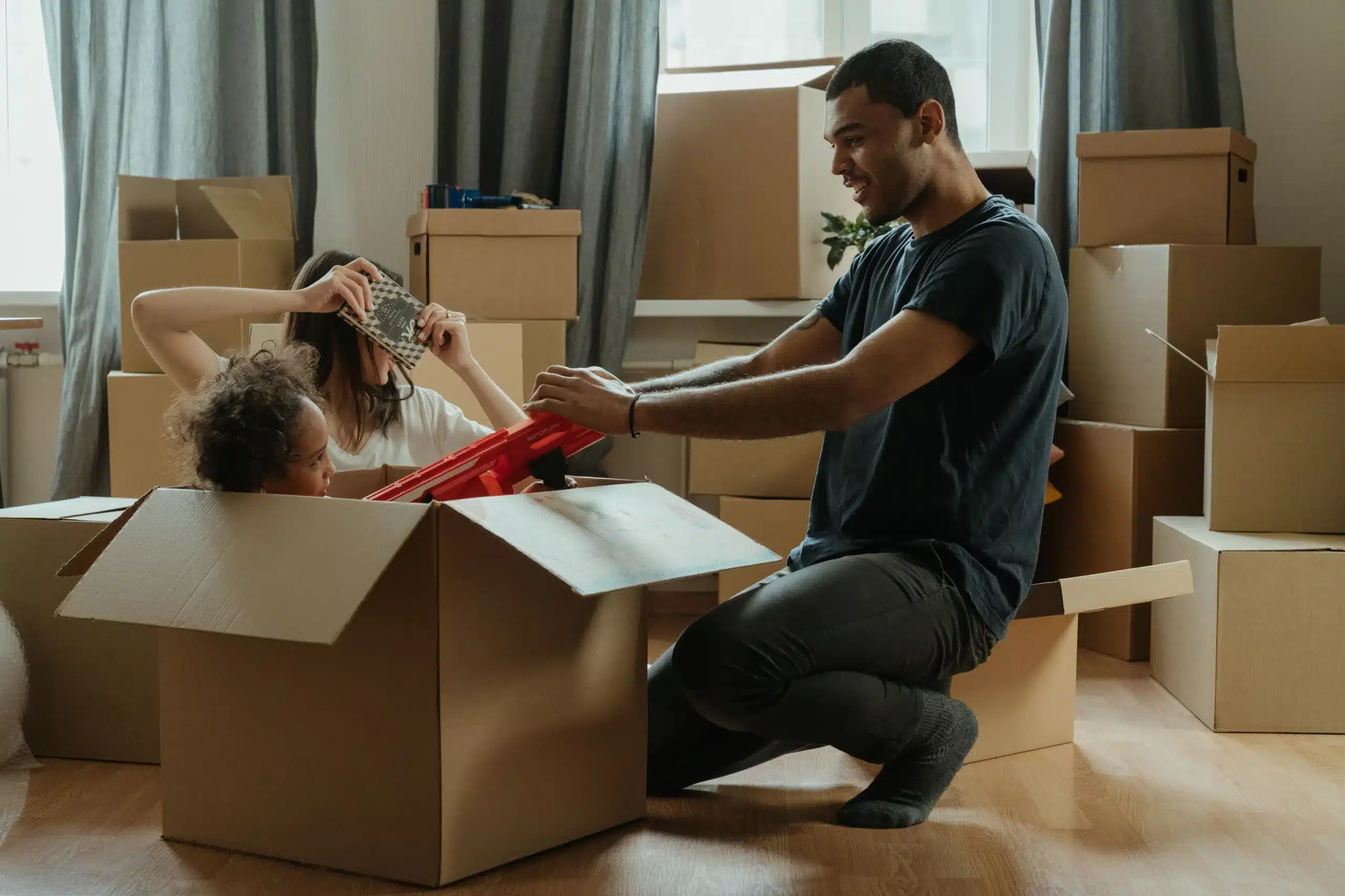
Boxes are the one moving cost you can get to zero. Shops throw out hundreds of them a week, and most will hand them over if you ask at the right moment. The trick is knowing which boxes are worth carrying home and which ones will split open on the stairs.
Here are eleven places that reliably have them, roughly in the order worth trying.
1. Buy Nothing groups and Facebook Marketplace
The fastest option, and usually the best quality. Someone who finished a move last weekend has a stack of real moving boxes in their hallway and wants them gone. These are proper double-walled boxes, not retail cast-offs.
Listings disappear within hours, so search in the morning and message the same day. Use your neighbourhood name rather than the city: “free boxes Metrotown” or “free boxes East Van” will surface listings that a search for the city misses. On Facebook, the Buy Nothing groups tend to be friendlier than Marketplace, and people there will often hold a stack for you until the evening.
2. BC Liquor Stores
Underrated, and the sturdiest free box you will find. Liquor cartons are built to carry forty pounds of glass, so the walls are thick and the flaps do not tear. Wine boxes come with cardboard dividers already inside, which are worth more than the box itself if you are packing glasses, stemware or mugs.
Ask a staff member which day their truck comes, then show up that morning. Most stores flatten and bale their cardboard within a day of unloading, so timing matters more than location here.
3. Grocery stores
Supermarkets move an enormous amount of cardboard every week. Save-On-Foods, Real Canadian Superstore, Safeway, No Frills and T&T all keep boxes behind the tills or in the back, and most will let you take them if you ask rather than helping yourself.
Two rules. Go early morning or late evening, when staff are restocking and the boxes have not been crushed yet. And take dry goods boxes only. Anything that held fruit or vegetables carries moisture, sometimes fruit flies, and a smell that transfers to everything you pack inside it.
4. Bookstores
Book cartons are engineered for dense, concentrated weight, which makes them ideal for your own heavy items: books, tools, small appliances, records, tinned food. Their small size is the point. A big box full of books is a box nobody can lift.
Indigo and Chapters get regular shipments. The UBC and SFU bookstores are worth a call in late August and early January, when textbook season fills their back rooms. Independent shops on Commercial Drive and Main Street usually have a few and are happy to see them reused.
5. Costco
Members already know about the bin of boxes at checkout. The better move is to ask someone on the floor for the oversized shipping cartons from the back, which are far more useful for bedding, pillows, lampshades and anything bulky but light.
Still Creek in Burnaby, Bridgeport in Richmond and the North Vancouver warehouse all have space to sort through what you are given without blocking an aisle.
6. Your building’s recycling room
If you live in a tower or near one, check here first. New tenants flatten their boxes and leave them stacked by the bins, often the same week they move in. Buildings with high turnover produce the most: the West End, Yaletown, Downtown, Brentwood, Metrotown, Lougheed and the newer towers along the Expo Line.
Go on a Saturday or Sunday evening, when the weekend’s move-ins have finished unpacking.
7. Pharmacies and convenience stores
Shoppers Drug Mart, London Drugs and neighbourhood corner stores receive small, rigid boxes daily and rarely get asked for them. They are the right size for bathroom cabinets, cables, cutlery and the awkward drawer of things that has no category.
8. Coffee shops
Cafés take delivery of milk, syrup and beans in surprisingly solid cardboard. Call ahead rather than turning up, and ask them to set a few aside for a specific day. JJ Bean and 49th Parallel are worth trying, as is any independent café you already go to. Being a regular helps more than anything else on this list.
9. Furniture and appliance stores
The one place to find genuinely large, flat cardboard. Mattress, mirror, television and artwork boxes are almost impossible to buy cheaply and impossible to improvise. Ask at IKEA Coquitlam or Richmond, Structube, Leon’s or any local appliance dealer, and be specific about the size you need.
10. U-Haul customer connect and box exchanges
U-Haul runs a free box exchange board where people list leftovers after a move. Most Metro Vancouver locations also keep a pile of returned boxes near the entrance that anyone can take. No purchase, no membership.
11. Campus move-out weeks
Late April at UBC and SFU, and again in late August, residence hallways fill with flattened cardboard. The same happens around student housing in Burnaby Mountain and near Langara. If your move lines up with either window, an hour of driving will fill a car.
📦 Moving a 2-bedroom or larger with Secure Moving? Hard plastic bins are included. We drop them off the day before your move, collect them after, and you skip this list entirely. Get a free quote.
Where to look, by area
Free cardboard is a local problem, and the best source changes depending on where you are packing.
- Vancouver: apartment recycling rooms in the West End and Yaletown, liquor stores on Denman and Davie, independent bookshops on Main and Commercial.
- Burnaby: Costco Still Creek, the Metrotown and Brentwood towers, Real Canadian Superstore on Lougheed.
- North Vancouver and West Vancouver: Costco North Van, the Park Royal retailers, and the liquor stores in Edgemont and Ambleside.
- Surrey and Delta: Superstore and Walmart on King George, Central City retailers, and the newer Whalley towers for recycling rooms.
- Richmond: T&T at Lansdowne, Costco Bridgeport, and the shops around Aberdeen.
- Coquitlam, Port Moody and the Tri-Cities: IKEA Coquitlam for oversized cardboard, Superstore on Lougheed, the Suter Brook and Klahanie buildings.
- Langley, Abbotsford, Chilliwack and Mission: big-box retail along the Fraser Highway and South Fraser Way, plus community Buy Nothing groups, which are noticeably more active out here than in the city.
Check the box before you pack it
A free box that fails halfway down a staircase costs more than a new one. Before anything goes inside, look for soft or dented corners, water staining along the bottom seam, any smell at all, and gnaw marks or droppings. Grocery and restaurant cardboard is where problems usually turn up. Once you have a stack that passes, our packing guide covers which box takes what and how to fill one so it survives the truck.
Squeeze the side walls. If they flex easily, the box is fine for pillows and linen but not for books or dishes. And skip anything that has already been taped, unpacked and retaped more than once. Corrugation only survives so many trips.
What not to bother chasing for free
Two items are worth buying. Wardrobe boxes with a hanging rail save an hour of folding and rehanging, and nothing free substitutes for them. Dish barrels with cell dividers do the same job for a kitchen. Everything else on a moving supply list, including tape, paper and bubble wrap, is cheap enough that hunting for a free version is not worth the afternoon.
Common questions
Where can I get free moving boxes near me?
Start with a Buy Nothing group for your neighbourhood, then the nearest liquor store, then the recycling room of the largest apartment building within walking distance. Those three cover most of Metro Vancouver and the Fraser Valley and take about an hour.
Do liquor stores really give away boxes?
Most do, and they are the best free box on this list because of how they are built. Ask staff rather than taking from a stack near the loading area, and find out which day their delivery arrives.
Are grocery store boxes safe for moving?
Dry goods boxes are fine. Produce boxes are not, because moisture weakens the walls and the smell stays with whatever you pack. Anything from the bakery or deli section is worth avoiding for the same reason.
How many boxes do I need?
A studio takes roughly 15 to 20, a one-bedroom 25 to 35, a two-bedroom 40 to 60, and a three-bedroom house 70 or more. Collect about a fifth more than that. Running out at 11pm the night before is a specific kind of misery, and unused cardboard is easy to pass on.
If you would rather skip the hunting, our packing team brings everything with them.
