

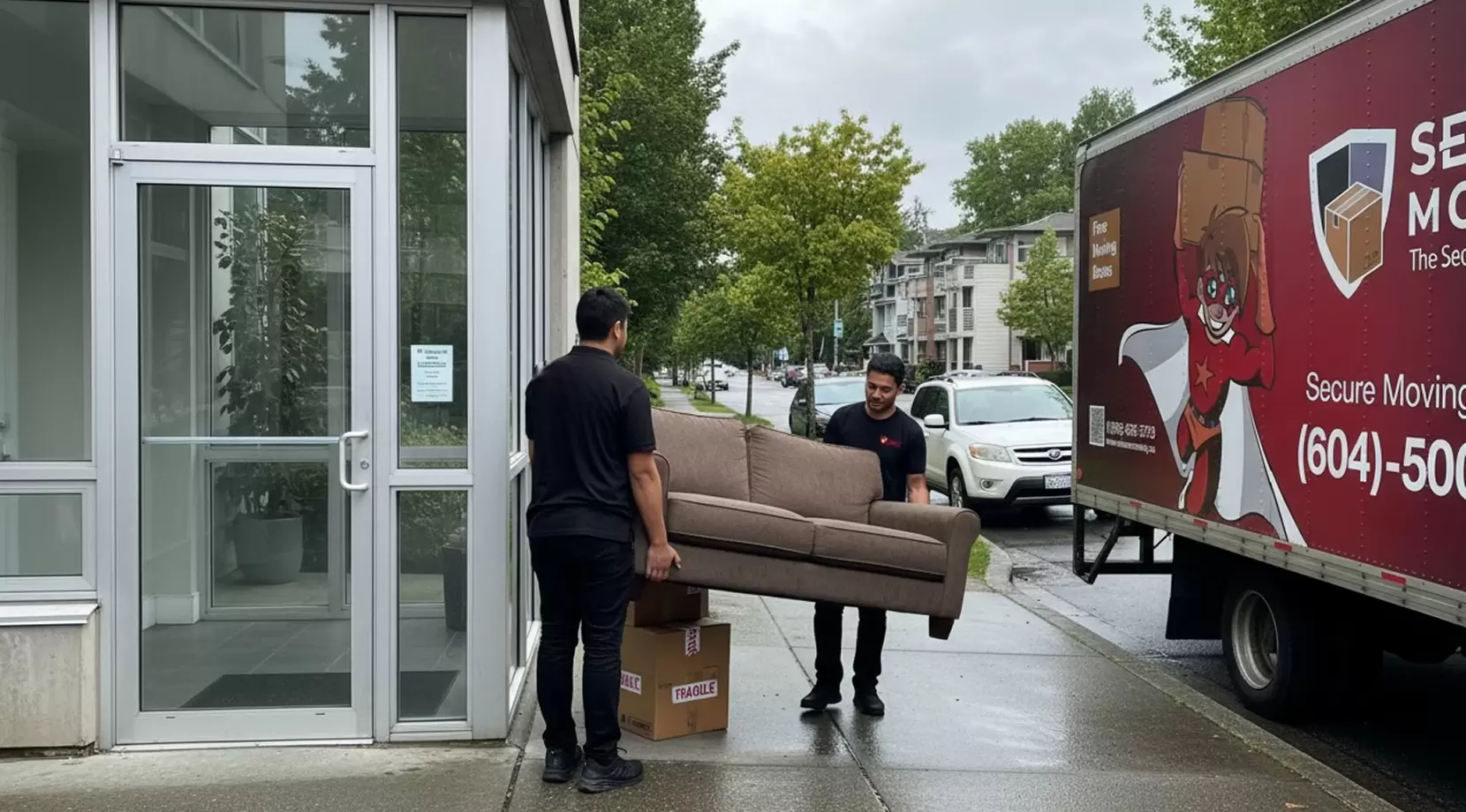
Imagine angling a couch around a tight condo corner while the elevator timer beeps and neighbours watch. In Metro Vancouver cities like Burnaby, Richmond, and Vancouver, many moves involve condos, studios, or small high-rise rentals, so that scene is common.
This guide gives practical small apartment moving tips so you know how to move furniture into a small apartment safely, without damage, and without guessing on moving day.
Measure Everything: Doors, Hallways, Elevators, Furniture
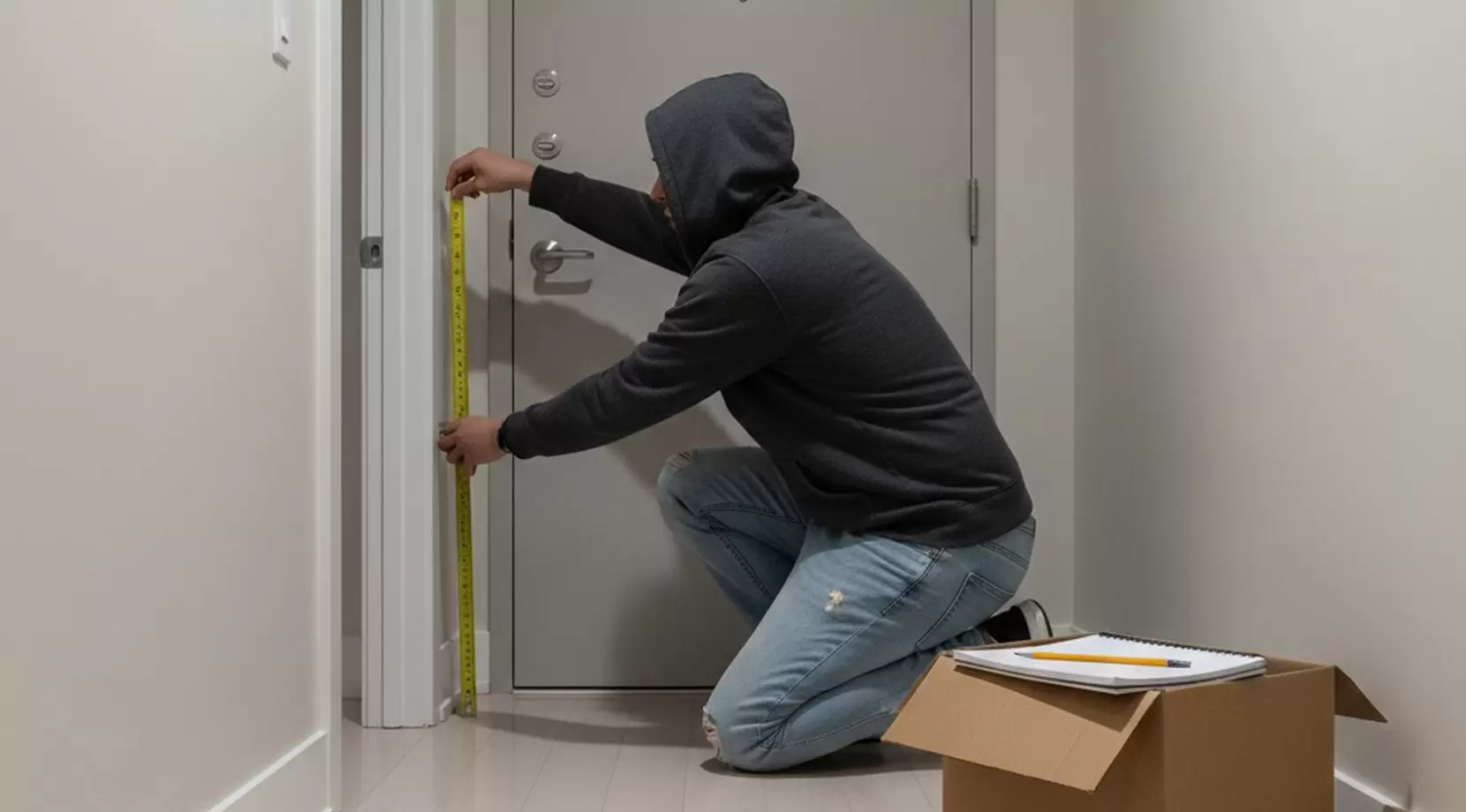
Treat measuring as your first step in this mini furniture moving guide. Measure every doorway, stairwell, hallway, and elevator on the path of travel. Then measure sofas, mattresses, bed frames, and tables, and compare those numbers so your notes become a simple furniture moving checklist and you spot tight spots early.
One Metrotown couple only got their 92-inch sofa into the building by removing the legs and standing it diagonally in the elevator, something they discovered while measuring furniture before moving, instead of getting stuck in apartment moving challenges in the middle of it
Speaking of planning and timing, see our guide on how long a studio apartment move really takes.
The narrowest legal doorway in a BC dwelling is 24 inches
The BC Building Code sets the minimums, and Vancouver’s own by-law matches the provincial figures on stairs:
| Opening | BC Building Code minimum |
|---|---|
| Required entrance doorway to a dwelling | 810 mm (31.9 in) |
| Most interior rooms | 760 mm (29.9 in) |
| Bathrooms, walk-in closets, rooms off a 710 mm hallway | 610 mm (24 in) |
| Stairs serving a single dwelling unit | 860 mm wide, 1,950 mm headroom |
| Required exit and public stairs, residential buildings | 900 mm wide, 2,050 mm headroom |
Twenty-four inches is the number to hold on to. Not the front door, but the bathroom, the walk-in closet, or any room off a 710 mm hallway. In a small apartment those are exactly the doors you need to get furniture through, and 24 inches is narrower than most sofas are deep.
Measure the diagonal, not just the width. Anything you have to angle through a doorway or around a turn presents its diagonal rather than its face. Run a tape corner to corner across the item’s largest face and compare that number to the opening, and to the headroom at any turn. Our guide to moving heavy furniture up stairs covers why the headroom at the turn is the measurement that actually stops a job.
In a building, measure the elevator car’s internal depth and its door height separately. They are different numbers and both bind. A tall item that fits the door may not fit the car, and an item that fits the car may not clear the door. A single-piece king foundation and a tall bookcase are the two items that most often fail this test.
Downsize Smartly: What Fits, What Never Fits
A small apartment move cannot carry every big piece from a large Burnaby or Richmond house. Use simple apartment furniture moving tips and ask if each item fits the path without special gear, suits a 1-bedroom condo or studio apartment move, and earns its footprint once inside.
Then focus on small apartment space optimization with pieces like storage ottomans, sofa beds, storage beds, and nesting tables while avoiding hoisting or long carry charges described in our hidden and unexpected moving costs.
Disassemble Correctly: Label Parts, Protect Hardware
Disassembling furniture is one of the easiest small apartment moving tips for tight stairwells and narrow doors. Take quick photos, remove sofa feet, table legs, headboards, and shelves, and put screws and brackets into labelled zip bags taped to each piece.
Make sure to wrap sharp corners, and you will find moving furniture into small spaces and later reassembly far simpler, with many fewer chances for moving furniture without damage to walls or frames.
Use the Right Tools: Sliders, Straps, Dollies
A few tools turn a heavy job into a safer one. Furniture sliders, shoulder or forearm straps, and a two-wheel or appliance dolly let you handle moving heavy furniture safely, as you move furniture in tight spaces, while moving blankets and stretch wrap protect corners and doors.
Navigate Tight Spaces: Stairs, Hallways, Elevators
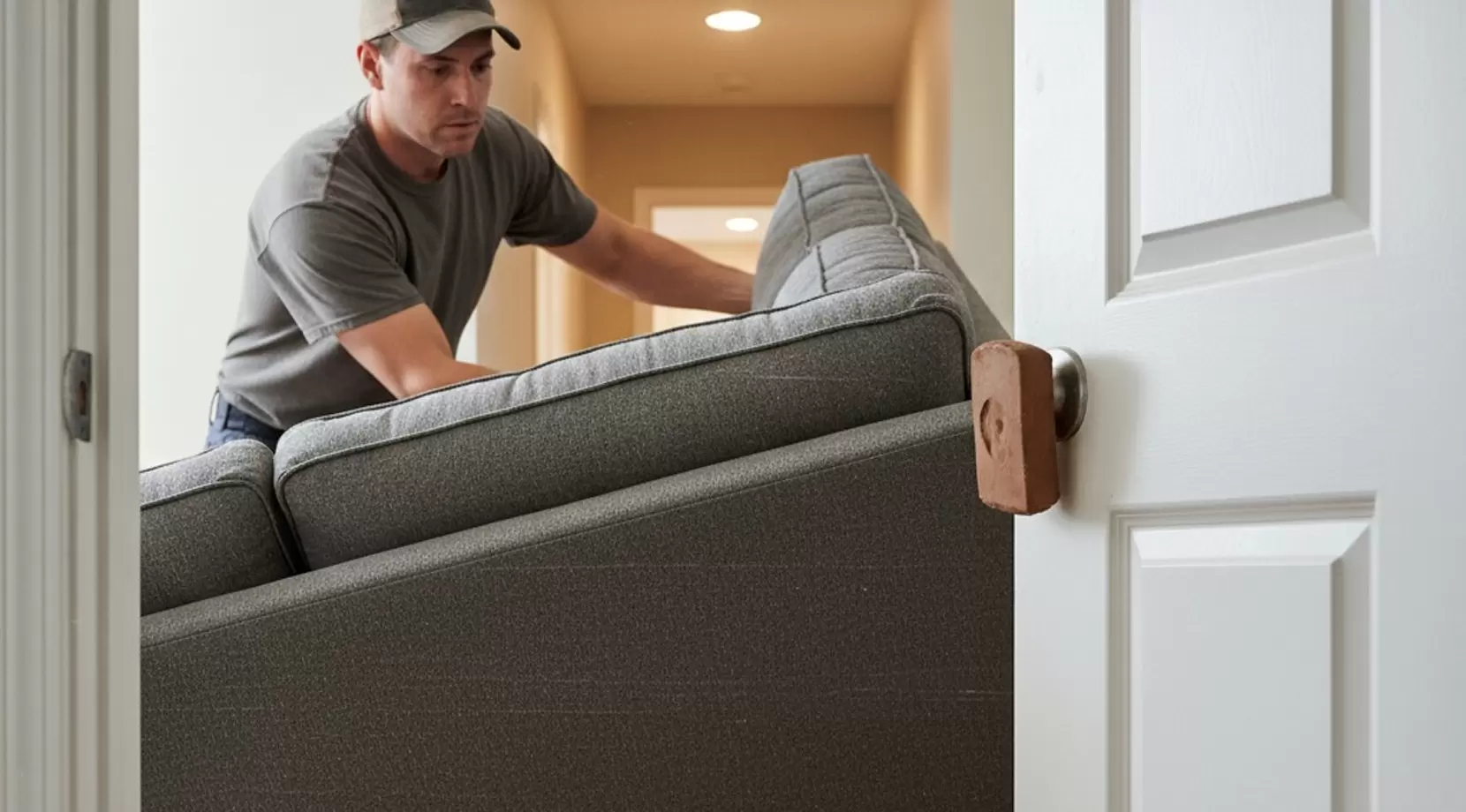
Technique matters once you start moving furniture into an apartment. Use a high-low carry on stairs, tilt couches into an L shape to pivot through narrow doors, and stand long pieces upright in the elevator if the height allows.
Also, remember that elevator reservation apartment rules in many BC condos require you to book a service elevator, use pads, and pay a refundable deposit in set time windows. We cover these, as well as logistics and pricing, in our moving costs guide.
What a Vancouver street permit costs, and when to apply
If the truck needs the street or metered spaces, the city is involved, and the figures are public:
- Temporary Street Occupancy Permit, which explicitly covers moving trucks: a signage fee of $138.46 for each seven-day period, or the same amount once plus meter rates.
- Occupancy fee if anything is stored on city property: $3.99 per 10 square metres per day, with a $135.14 minimum.
- Lead time of 7 to 10 business days from payment. Expedited handling at 5 to 7 business days can be requested and is not guaranteed.
Note the gap: the city’s own moving guide tells you to apply seven days before moving day, which is tighter than its own stated lead time. Apply earlier than that.
Burnaby, Richmond and Surrey each run their own permit with their own fee structure, and they are not directly comparable because they charge for different things. Our guide to what a Vancouver move costs has the city-by-city detail.
There is no $50 cap on strata move fees in BC
The figure is widely believed and it does not exist. We checked the Strata Property Act, the Strata Property Regulation and three government strata guidance pages. No dollar cap on move fees appears anywhere, and the regulation contains no provision mentioning moving at all.
What the law does require is two things, and both are checkable:
- The fee must be set out in a bylaw, or in a rule that owners have ratified under section 125(6) of the Act. Section 110 prohibits user fees for common property except as set out in the regulations, and section 6.9 of the regulation permits them only where the requirements are met.
- The amount must be reasonable. That is the regulation’s own word. A fee may be a fixed amount or determined on a reasonable basis, including the recovery of the strata’s operating or maintenance costs.
So the useful move is: pull the strata’s bylaws and rules, check the fee is actually in one of them, check the rule was ratified, and ask whether the amount is defensible. Arguing that it exceeds a cap that does not exist gets you nowhere, and it is what people currently do.
The $50-adjacent rule that is real is about something else. Under section 7 of the Residential Tenancy Regulation, a landlord may charge a tenant the greater of $15 or 3 per cent of the monthly rent for moving between rental units within the same residential property, where the tenant requested the move. A landlord may also pass through a move-in or move-out fee charged by a strata corporation to the landlord, at cost and not capped. The same section prohibits any fee for accepting, reviewing or processing a rental application, and caps a late-rent administration fee at $25.
Nobody requires an elevator booking, which makes it negotiable
As far as we could find, no municipality in Metro Vancouver requires an elevator booking or charges a fee for one. Booking windows, pads, deposits and time limits are entirely private strata or property-management terms, imposed as bylaws or ratified rules under the same reasonableness test as any other user fee.
Two practical consequences. The booking is negotiable in a way a municipal permit is not, so ask for a longer window, ask whether the deposit is refundable and on what condition, and ask in writing. And a two-hour elevator window costs money even when the booking is free, because a crew that cannot use the elevator is a crew standing in a lobby. Paying for a longer window, where one is available, is usually the cheaper option.
Protect Furniture & Walls During the Move
Protecting furniture during a move also protects drywall, trim, and floors. Wrap items in moving blankets held with stretch wrap, add cardboard or foam corner protectors, and use floor runners or flattened boxes in hallways
Make sure to stick felt pads under chair and table legs so moving furniture without damage becomes your default habit when you’re moving furniture into small spaces for relocation or simply for redesigning your apartment.
Lift Safely: Simple Habits to Protect Your Back
Moving heavy furniture safely is more important than shaving a few minutes off the job. Follow lifting habits from WorkSafeBC’s lifting and handling guidelines.
Keep the load close, bend at hips and knees instead of rounding your back, avoid twisting while holding weight, share the job with helpers, and treat these steps as non-negotiable tips for moving furniture, not optional tips.
There is no legal lifting limit in BC
WorkSafeBC is the right source and it is worth adding the thing its page does not say and readers assume. Part 4 of the Occupational Health and Safety Regulation, sections 4.46 to 4.53, contains no weight threshold and no numeric trigger anywhere in it. The duty is to identify, assess and control the risk of musculoskeletal injury, taking account of the force required, work postures, the object’s size, shape and weight distribution, floor surfaces, working heights and cold, with controls reviewed at least annually.
In a tight hallway that framework is more use than a number would be, and so is the team-handling guidance from the Canadian Centre for Occupational Health and Safety: members of similar height and strength, an assigned leader, commands agreed before you start, a practice run, walking in step, and clearing the path first because “grease, oil, water, litter, and debris can cause slips and falls”. Avoid twisting and side bending while lifting. And the line everybody forgets: “the combined strength of the team is less than the sum of individual strength.”
Know When to Hire Movers for Apartment Furniture
There is a clear point where a do-it-yourself plan stops feeling smart and starts feeling risky. For higher walk ups, very heavy items, tight stairwells that might need hoisting, or buildings with strict elevator windows and long carry routes through parking garages, hiring professional residential movers for moving furniture into an apartment will usually cost less than a damaged wall, strained back, or delayed small apartment move, especially when good moving companies like Secure Moving’s crews often finish these jobs within a half day. If only one sofa or bed is the problem, you can book single item movers for that piece alone.
Secure Moving for Small Apartment Moves
Once you decide that a small apartment move needs more than a borrowed van and two friends, Secure Moving can handle the heavy work.
Our crews manage small apartment moves across Richmond, Burnaby, Vancouver, and nearby cities, bring tools like dollies, straps, and moving blankets, understand strata rules on elevator reservations and loading zones, and routinely disassemble and reassemble common household pieces.
So, if you want a trained crew to deal with tight corners and parking while you focus on keys and paperwork, get a free quote from Secure Moving, the most trusted moving company in Vancouver, today!
FAQ
Is there a cap on strata move-in fees in BC?
No. No dollar cap appears in the Strata Property Act or its regulation, and the regulation does not mention moving at all. The requirements are that the fee is in a bylaw or in a rule owners have ratified, and that the amount is reasonable. The $15-or-3-per-cent figure people half-remember is a Residential Tenancy Regulation rule about a tenant moving between units in the same property, which is a different thing.
What is the narrowest door my furniture has to fit through?
Possibly 610 mm, about 24 inches. The BC Building Code permits interior doorways that narrow for bathrooms, walk-in closets and rooms off a 710 mm hallway. Measure every opening on the route at its narrowest point, and measure your furniture’s diagonal rather than its width, because anything angled through a doorway presents its diagonal.
Do I need a permit to park a moving truck in Vancouver?
If the truck will occupy a street or metered spaces, yes. The Temporary Street Occupancy Permit covers moving trucks, with a signage fee of $138.46 per seven-day period and an occupancy fee of $3.99 per 10 square metres per day subject to a $135.14 minimum. Allow 7 to 10 business days from payment, which is longer than the city’s own moving guide suggests.
