

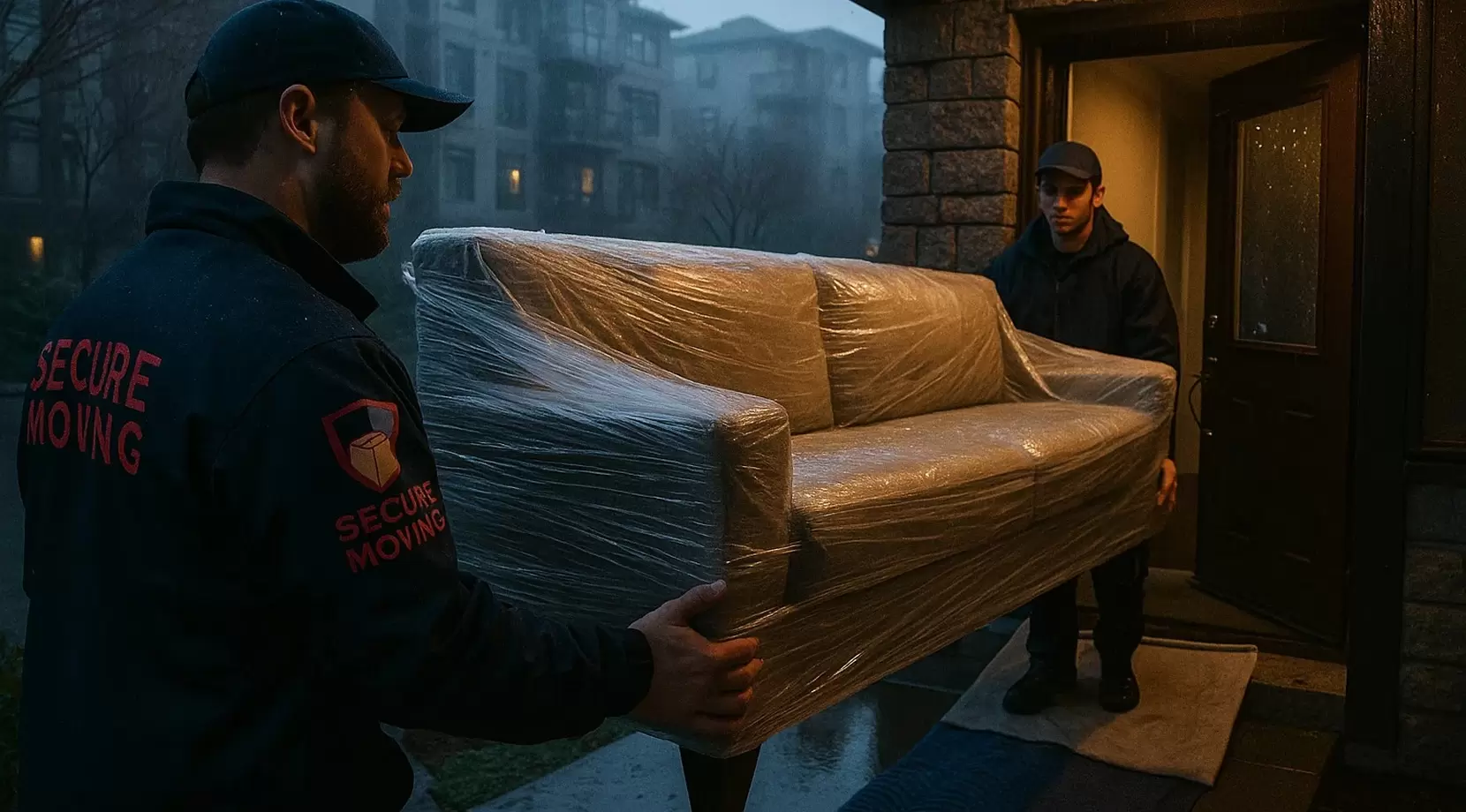
Winter in Metro Vancouver is more rain than blizzard, yet cold snaps and hills can turn a simple move into a slip risk. This guide keeps you dry and shows how local crews manage timing and gear for moving in winter.
Why Moving in Winter is Different in Metro Vancouver
Vancouver’s wet season peaks through late fall and winter, so planning for steady rain matters more than deep snow. The City prioritizes major roads, bridges, bus routes, and key pedestrian paths, while property owners must clear adjacent sidewalks by 10 am after snowfall. For official guidance, see the City’s winter maintenance page.

Pre-Move Checklist for Cold, Rain, and Light Snow
A short setup goes a long way. Build a plan that protects floors, keeps boxes dry, and avoids elevator bottlenecks.
- Book the strata elevator and loading bay, then confirm truck height clearance and any loading zone rules for your building or street. For scheduling steps, see our post on how far in advance to book movers.
- Stage a covered handoff zone at the door. Lay floor runners, keep towels at the entrance, and set a boot tray to trap water.
- Choose tougher boxes for wet days. Double-wall cartons for books and dishes, plus plastic totes for documents or electronics. Add mattress bags and shrink wrap for upholstered pieces.
- Treat icy walkways and steep driveways in the morning. Clear sidewalks fully and on time to keep paths safe for the crew.
- Route plan with a timing buffer. If a cold front brings sleet or ice, shift departure to a safer window and stick to treated arterials first.
Loading Day Tips that Keep Items Dry and People Safe
A clear flow is the difference between damp chaos and a quick load. Think “wet team outside, dry team inside,” and keep ramps grippy.
- Run a two-zone flow. The outside team passes to the inside team at the threshold. Rotate towels and set a small canopy at the door.
- Add non-slip grip on ramps and stairs. Load heavier, less delicate items first, then fragile and electronics last.
- Create a clean “dry drop zone” inside the new home. Unwrap there only and keep sealed boxes off wet floors.
- Keep moving truck safety in bad weather in mind. Slow maneuvers and longer stopping distances matter once roads are slick.

After Arrival: How to Handle Cold Weather
Unwrap damp surfaces right away, run a small fan or dehumidifier in one room, and check any paper boxes that took spray. Salt the entry path during heavy foot traffic, then roll up runners once the floors are dry.
Costs, Timing, and Winter Availability
Moving in winter months can be easier on the calendar and the wallet compared with peak summer. Mid-month and mid-week dates are often more open. For seasonal timing pros and cons, read our guide to the best time to move.
Local Reality: Rain First, Then Sudden Cold Snaps
ALT: Shaded driveway at dawn shows thin ice. The homeowner spreads grit while the mover tests footing. Frost on grass, ramp ready, breath visible, early light, freeze-thaw risk highlighted, morning moving routine.
Most winter days here are cool and rainy, so plan like it will rain. Keep tarps and stretch wrap ready, then watch for freeze-thaw nights that leave black ice on shaded driveways in the morning.
If you are moving in Vancouver rain, the “wet team, dry team” setup shortens exposure. For moving house in the snow, pad extra time for ramps and stairs, and keep spare gloves so grip does not fade as fabric gets wet.
Driving note: If your move involves highways outside the core, B.C. designates winter tire and chain routes during the season. Look for M+S or the mountain-snowflake symbol and proper tread depth.
Our Experience with Winter Moves
Last January, a Kitsilano condo move ran through a cold rain with a short loading bay window. The crew set a canopy at the threshold, swapped towels every fifteen minutes, and staged boxes in the parkade.
With a wet-team and dry-team handoff, unload time dropped by a fifth. Electronics stayed sealed until final placement, and floors stayed clean thanks to runners and a boot tray rotation.

Move in Winter Right with a Local Crew that Plans for Rain
You do not need a sunny forecast to have a smooth move. Secure Moving plans winter moves around building rules, priority routes, and real-time conditions. Our crews bring floor runners, mattress bags, stretch wrap, and non-slip gear.
Dispatch checks weather and traffic, then maps safe routes during rain or snow so your day stays on track. You get clear communication, careful packing, and options for apartments, houses, and offices across Vancouver, Burnaby, Coquitlam, and Port Moody.
How Secure Moving Handles Winter Moves:
Secure Moving crews follow a clear winter playbook built for Metro Vancouver conditions:
- Access & Building Coordination: Confirm strata elevator windows, loading bays, and truck clearance; pre-label staging zones to reduce door-open time.
- Wet/Dry Workflow: Assign an outside “wet team” and an inside “dry team” at the threshold; rotate towels and keep a compact canopy at the door during rain or sleet.
- Protective Materials: Floor runners, stretch wrap, mattress covers, and plastic totes for moisture-sensitive items; fragile pieces loaded last and unwrapped only in a dry drop zone.
- Traction & Handling: Non-slip ramp covers, steady pushes on slopes, and spotters on slick stairs; heavy, low-risk items move first when surfaces are damp.
- Route & Timing: Use treated arterials during freeze-thaw periods, add a timing buffer for traffic slowdowns, and stage under cover if conditions temporarily worsen.
If you’re ready to move, don’t waste time and get a free quote today!
