

Picking the time to relocate to Vancouver doesn’t depend on weather alone. Your date also affects how hard it is to book movers, reserve a condo elevator, and park a truck close enough to avoid a long carry. Below is a season-by-season breakdown plus simple scheduling rules you can use right away.
Quick Answer: The Best Time to Relocate to Vancouver for Most People
Late spring and early fall are usually the easiest mix of comfortable conditions and fewer scheduling headaches. Demand tends to be lighter than midsummer, so it’s easier to book a preferred start time and avoid elevator bottlenecks. If you’re flexible, choose a weekday in May, early June, September, or early October, then aim for mid-month to dodge lease turnover traffic.
Summer can still be a great pick for families, but it rewards early planning and avoiding month-end weekends.
Vancouver Weather by Season and What It Means on Moving Day

Vancouver is rarely icy, but rain is a constant factor. Wet sidewalks and parkade ramps can slow loading, and condo corridors can take longer if your building expects floor protection.
Here’s a simple snapshot:
| Season | What Feels Easy | What Can Slow You Down | |
| Spring | Mild days | On-and-off rain | |
| Summer | Dry loading | Higher demand, heat | |
| Fall | Cooler work | Rain returns | |
| Winter | More availability | Rain plus dark early |
Plan a dry staging spot near the door, and you can keep the pace steady in almost any month.
Summer: Peak Moving Season in Vancouver
Summer is a common answer to “when to move to Vancouver” because longer days give you a buffer, and the weather is friendlier. It’s also the core of the Vancouver moving season, so schedules fill quickly, and popular dates can cost more simply due to demand.
Two patterns matter most: month-end weekends get crowded fast, and dense areas like Downtown Vancouver and the West End can force longer walks from the truck to the unit if curb space is tight.
Fall and Spring: The Sweet Spot for Price and Less Chaos
Spring and fall often feel simpler. It’s easier to get an elevator window that fits your day, and it’s less common to run into loading bay conflicts. For many renters, the best month to relocate to Vancouver is a shoulder month, where you can book mid-week and mid-month and keep the whole day calmer.
This timing also works across Greater Vancouver. Moves between Vancouver and Burnaby, Richmond, North Vancouver, Surrey, or Coquitlam often faces fewer traffic surprises inthe shoulder months.
Winter: Cheapest Dates, Tougher Logistics
Winter can be a smart pick if you’re flexible. Lower demand often means more choices for start times. The tradeoff is rain and shorter days, so you plan for safety and pace.
A covered staging zone near the exit helps. Stage boxes there first, then load in batches so you cut slips and avoid slow back-and-forth trips.
The Main Demand Drivers: Leases, Schools, and Month-End Pileups

Season matters, but busy dates often come from the lease and school calendars. Renters spike demand around month-end and the first few days of the month, because move-out dates, elevator bookings, and key handoffs collide. If you can choose, mid-month usually runs smoother than the 29th through the 2nd.
Families commonly move in late June through August, and student moves can tighten availability in late August and early September. Our booking guide by season is here: How Far in Advance Should I Book Movers?.
Best Day and Time to Move in Vancouver
If you control the schedule, Tuesday to Thursday is often calmer than weekends, and mid-month is often calmer than month-end. Starting early helps in condos because elevator windows and concierge support tend to run more smoothly in the morning.
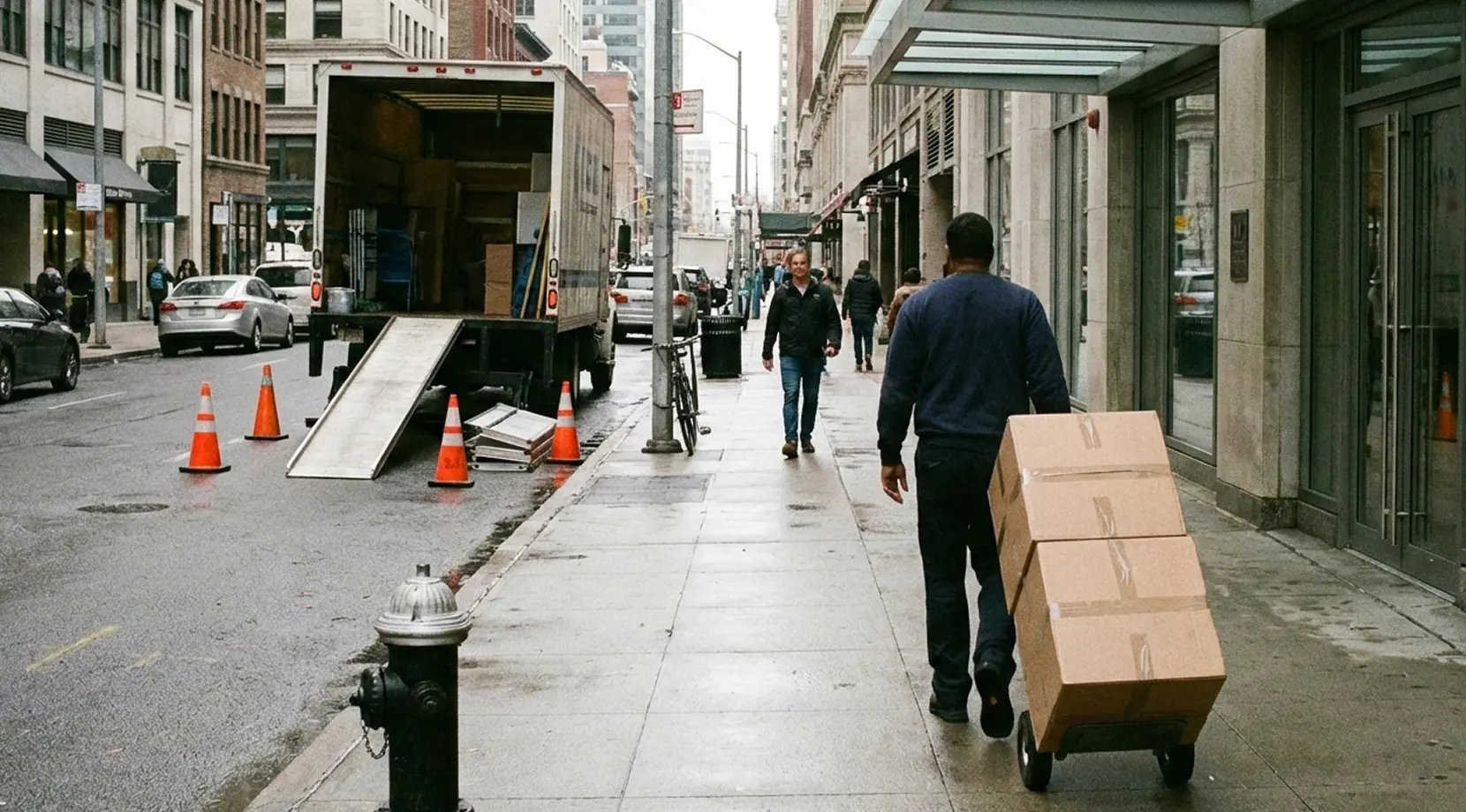
Also, remember the “small time tax” problem: if the truck parks far away, every trip turns into a longer carry, and that repeated walking time stacks up.
Costs and How Timing Changes the Number
Local pricing is mostly about time. Your date affects availability, and availability changes how much buffer you need to avoid paid waiting. A quick way to sanity-check a quote is to match your home size to a time band, then add extra time for access friction like long carries and elevator limits.
Planning examples for Vancouver local moves: studio or 1BR often lands around $450–$900 (CAD 615–CAD 1,230), 2BR condo around $800–$1,800 (CAD 1,095–CAD 2,460), and 3BR house around $1,500–$3,200 (CAD 2,050–CAD 4,375).
For a deeper breakdown, see Moving Costs in Vancouver: Rates, Examples, and Hidden Fees (2026).
Hidden “fees” are often time rules like travel time, minimums, and waiting. See our guide on Unexpected Moving Costs in Vancouver: Hidden Fees You Can Avoid.
Moving Truck Parking Permits and Condo Elevator Rules
If you need reserved meter space or regulated curb space for a moving truck, the City of Vancouver says to apply about 7 days before moving day. The City also notes a minimum of 7 to 10 business days to process and issue temporary street occupancy permits in many cases.
On the building side, condos often require a booked service elevator window and specific move-in and move-out slots. Build buffer time for keys, fobs, and a quick concierge walkthrough.
Get Your Dates Locked In Early and a Free Quote!
Once you’ve picked your time to relocate to Vancouver, having the right crew is the next step. Secure Moving brings 15+ years of local experience, full-time trained crews (no temps), modern trucks, and clear written quotes. We also offer optional packing and storage, and we’re fully licensed and insured, so your belongings stay protected from pickup to delivery.
Get a free quote from Secure Moving, the most trusted moving company in Vancouver today!
