


If you’re thinking, “Is Richmond, BC a good place to live?”, you are not alone. People moving around Metro Vancouver and newcomers from overseas often put Richmond, BC, on a shortlist for safety, diversity, and quick access to Vancouver and the airport.
You also face a high cost of living, slow bridges, and tunnel traffic in a city built on low river islands. That’s why this guide runs through everyday life in Richmond, BC, so you can judge if that mix fits your budget.
Short Answer to “Is Richmond, BC a Good Place to Live in 2026?”
For many people, living in Richmond, BC works well if they want a fairly safe, multicultural city that links quickly to downtown Vancouver. Crime exists like anywhere in Metro Vancouver, yet many families and newcomers describe Richmond as calmer than some neighbouring cities. The trade-off, however, is, of course, higher housing costs, busy rush hours, and constant talk about dikes and flood protection.
Pros of Living in Richmond, BC
People who enjoy living in Richmond, BC usually talk first about community, food, and convenience. The multicultural, newcomer-friendly feel stands out, with bilingual signs and ethnic grocery stores.
The food scene is famous for dim sum, hot pot, noodle houses, and bubble tea, especially around Aberdeen, Lansdowne, and Brighouse stations.
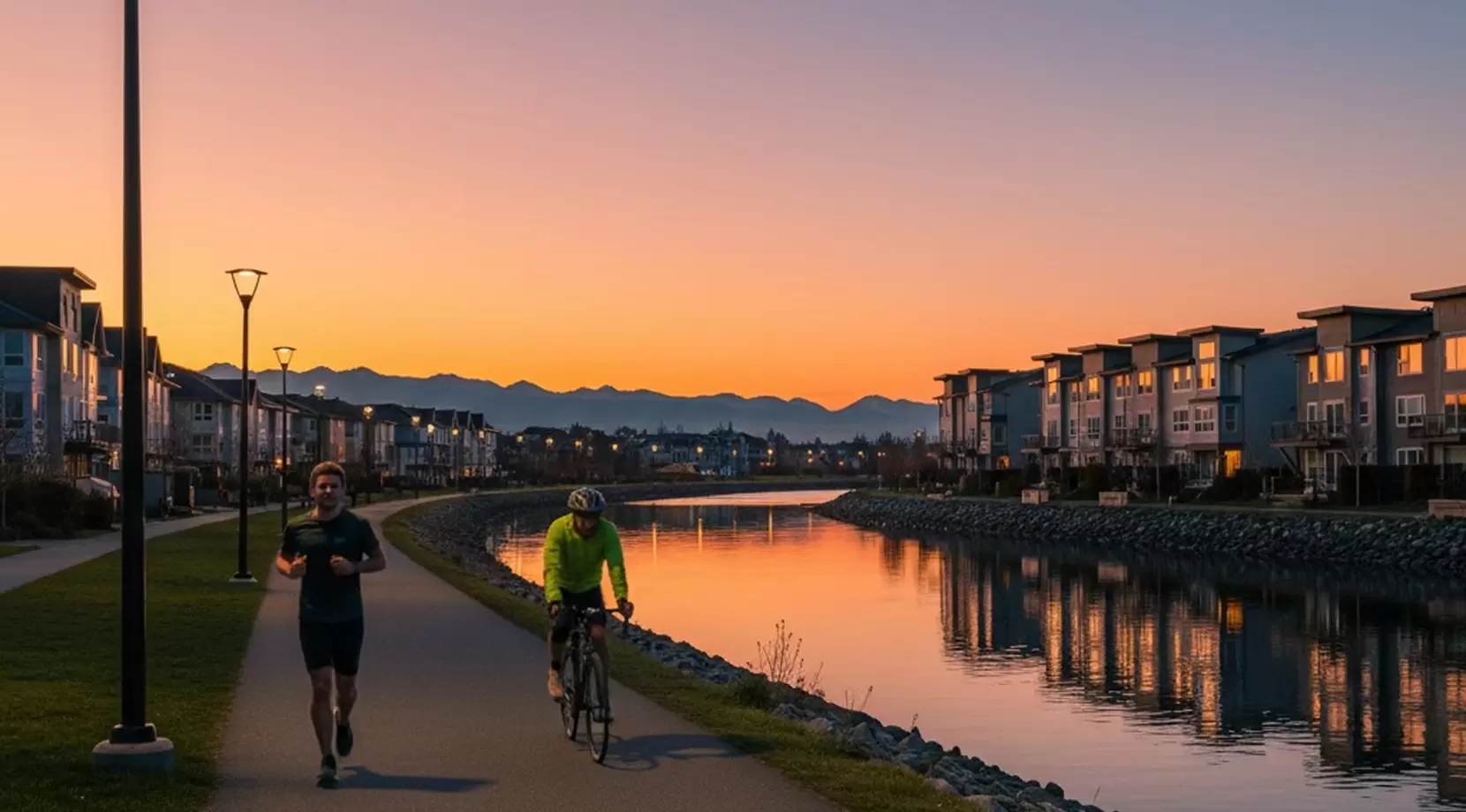
Plus. families spend a lot of time in parks and on the West Dyke Trail, Garry Point Park, Minoru Park, and Richmond Nature Park, which all sit on mostly flat, stroller-friendly routes.

Cons of Living in Richmond, BC
The biggest negatives in the pros and cons of living in Richmond, BC, are housing and traffic. The high cost of living shows up in both rent and purchase prices, which land on the higher side for British Columbia.
One-bedroom apartments near the Canada Line can take a large share of a single income, and detached homes sit far above national averages. Additionally, rush hour traffic over bridges and through the tunnel also wears people down.
Cost of Living and Housing Prices in Richmond
Talking about housing prices in Richmond means accepting that this is one of the pricier corners of Metro Vancouver. Data from LivingCost puts the total monthly budget for a single person in Richmond at about $2,172, including rent, with roughly $1,437 of that going to rent and utilities, and a quality-of-life score of 78; they rank the city among the more expensive markets in Canada and British Columbia.
On the rental side, the 2026 trend page for Richmond on Apartments.com lists an average apartment rent around C$1,932 per month, with typical one-bedroom units near that level and two-bedroom units around C$2,242.
That pushes many renters toward sharing larger units or picking smaller condos along the Canada Line to keep costs manageable. If you want to compare those numbers to Vancouver directly, ourthe areas we serve breaks down typical costs there so you can weigh Richmond against a more central address.
Safety in Richmond, Crime Rate, and Flood Risk
Safety is a key part of life in Richmond, BC, for families and newcomers. Richmond is seen as one of the calmer cities in Metro Vancouver, and many residents feel comfortable walking, cycling, and using transit in much of the city.
People still deal with bike thefts, car break-ins, and the usual problems of an urban area, yet severe violent incidents are not the main daily concern. Moreover, flood risk sits more in the background as the city relies on long dikes, pump stations, and drainage channels to keep a low, flat area as dry as possible during heavy rain.
Education, Family Life, and Schools in Richmond
Families thinking about living in Richmond, BC, pay close attention to schools. Richmond School District 38 serves a diverse student body with neighbourhood schools, French immersion, and international programs.
Graduation rates sit on the strong side for British Columbia, so many parents start their search with catchment maps and then pick a rental or house inside a preferred zone. Outside class time, kids lean on community centres, sports clubs, and flat bike routes to parks.
Neighbourhoods and the Richmond, BC Lifestyle
The Richmond, BC lifestyle shifts a little from one area to another. Steveston Village feels like a small fishing town attached to the city, with heritage docks, cafés, and family-friendly streets near the south dyke and Garry Point Park.
Around Brighouse, Lansdowne, and Aberdeen Station, condos and malls dominate, so most errands and restaurant trips happen on foot or by train. Further out, places like Terra Nova, Seafair, Broadmoor, and Ironwood mix houses and townhomes with local plazas and easier parking.
If you want a reference point in a nearby city, ourour Burnaby movers outlines costs and neighbourhood feel there, so you can see how it compares to Richmond.
Who Will Enjoy Living in Richmond, BC?
Overall, living in Richmond, BC suits a few groups especially well. Families with school-age kids often like the mix of low violent crime levels, strong schools, flat streets, and easy parks. Newcomers, especially from Asia, appreciate the large immigrant community, bilingual signage, and familiar food during their first months in Canada.
Additionally, people working in aviation, tourism, or logistics enjoy short commutes to airport and warehouse districts, and retirees who like long, level walks often settle near dikes and parks instead of in hillier parts of Metro Vancouver.
Before You Move to Richmond, BC: Practical Checks
If moving to Richmond, BC, feels realistic, a few simple checks make life easier later. Build a budget that covers the first month’s rent, damage deposit, elevator booking fees, and any condo move-in charges.
For houses and townhomes, ask owners or agents clear questions about past drainage or water issues, and read city flood information for the street you are considering. Parents should confirm school catchments if they have a specific elementary or high school in mind and test commute times during real rush hours, both by car and on the Canada Line.
For a step-by-step planning timeline you can follow for a Richmond move, our Residential Moving Checklist walks through the main tasks from about two months out to moving day.
Plan Your Move to Richmond, BC, with Secure Moving
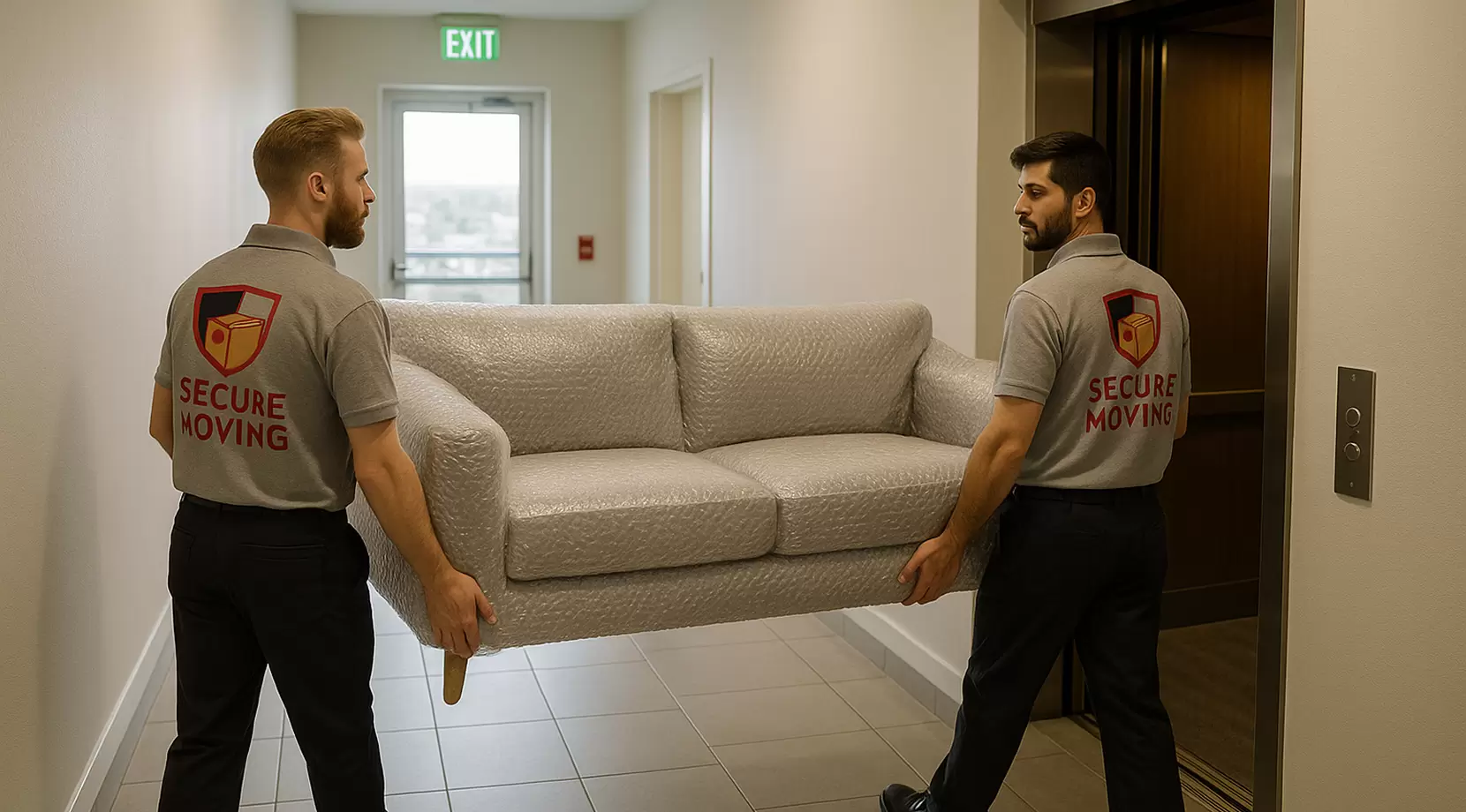
Once the pros and cons of living in Richmond, BC feel clear and you are ready to move, the last step is planning the actual day. High-rise condos, tight parkades, and strata rules can turn a simple move into a puzzle of elevator slots and loading zones. Local movers who already know Richmond’s buildings, loading bays, and townhouse layouts can save you stress and delays.
Secure Moving has spent years helping families, students, newcomers, and retirees move into and out of Richmond, handling packing, loading, apartment and condo jobs, and full house moves across Metro Vancouver. To take the next step, visit our Richmond movers page to get a free quote today!
Secure Moving is a Vancouver moving company that moves people in and out of Richmond every week.
FAQ
Our comparison of BC communities sets Richmond against the rest of the province.
For the opposite end of the region, our look at the North Shore sets out the case for and against living there.
For the numbers behind the safety question on their own, we have worked through the crime statistics separately, airport and all.
