

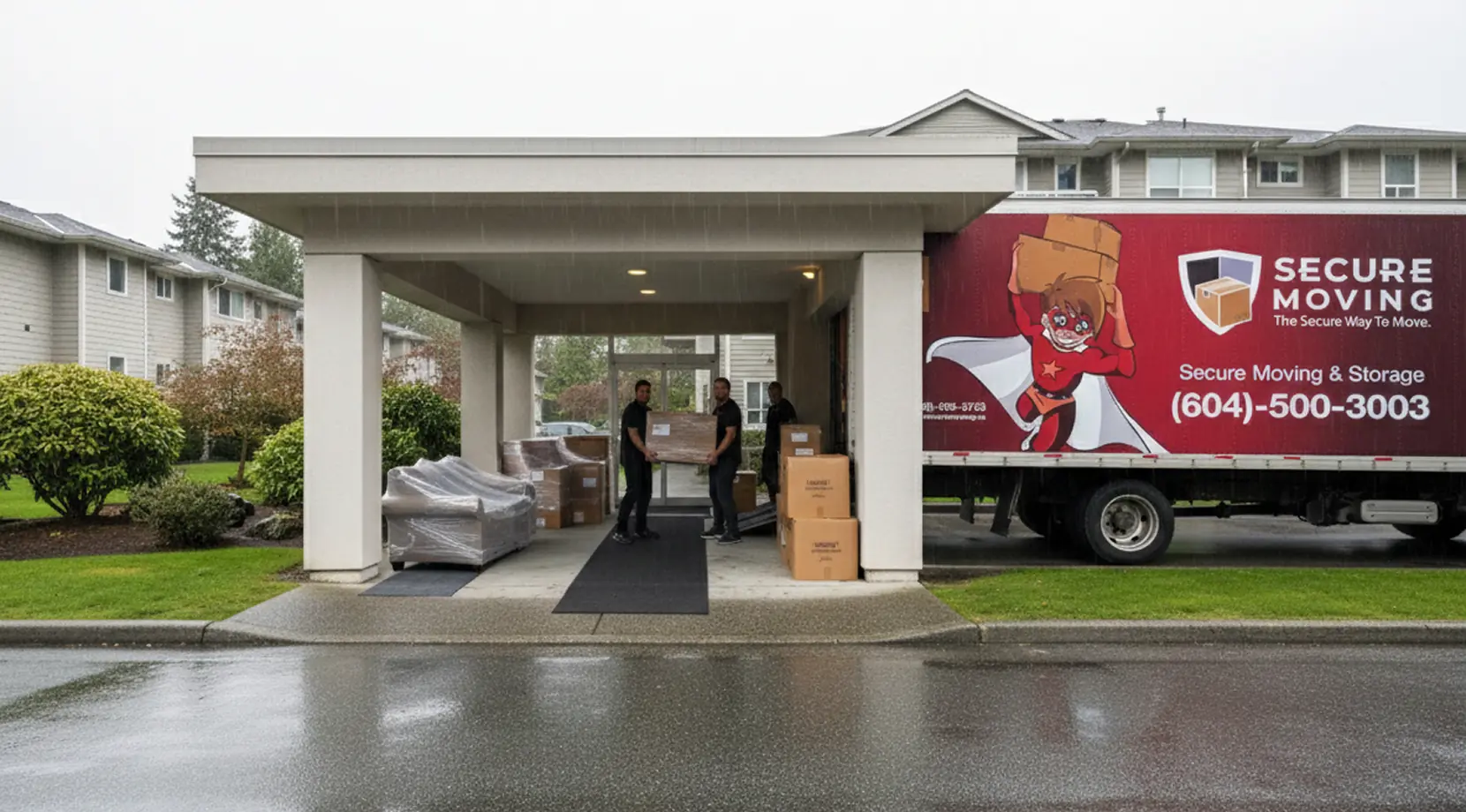
Vancouver weather does not wait for your lease dates, so moving in the rain is a normal problem, not a rare one. The goal is simple: cut outdoor exposure, keep walkways grippy, and protect anything that absorbs water fast.
This plan is written for Vancouver (condos, curb space, elevator windows), but the same steps help in Burnaby, Richmond, Surrey, Victoria, Calgary, Toronto, and anywhere a wet forecast shows up on move day.
Quick Rain Plan (Before You Touch a Box)
Check radar and alerts first, then decide how you will work. If an official warning is posted, treat it as a signal to add coverage, add time, or shift the date. The Government of Canada’s weather alerts page is the quickest place to confirm what is active in your area.
Light rain: moving in the rain is mostly about pace and plastic. Heavy rain: you need a covered staging spot (garage, lobby, loading bay) and a “wipe station” at the door.
Thunder or high winds: talk to your building and your movers early and pick a backup plan. If scheduling is tight, timing guidance helps: How Far in Advance Should I Book Movers?
Moving in the Rain Tips That Reduce Damage Fast
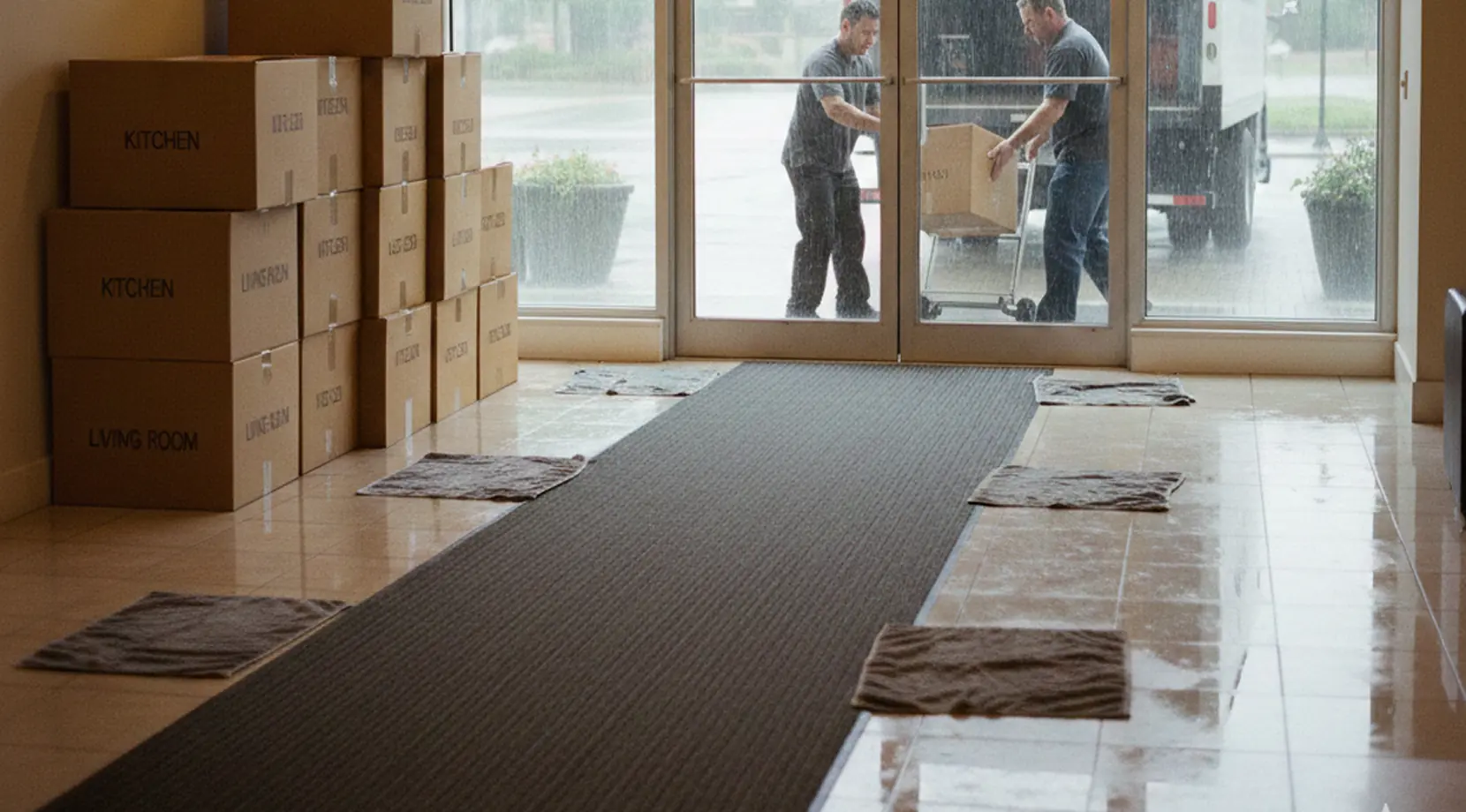
The biggest upgrade is a relay. Keep an indoor crew staging items by the door and an outdoor crew loading the truck. Close the truck between runs so wind-driven rain does not blow inside. This makes moving in the rain much less of a headache, because each person has one job.
Next, protect the walking path. Put towels and a runner at both doors, and keep a dry microfiber cloth at the door and in the truck. Wet ramps and stairs are where injuries happen, so slow down and pick footwear with real grip. WorkSafeBC’s page on slips, trips, and falls is a good reminder of how fast traction disappears.
Labels are a quiet failure point during moving in the rain. Write large, label two sides, then tape over the label so it stays readable. If you want a clean room and priority system, use How to Label Boxes for Moving.
A quick Vancouver condo story: an elevator booking window plus heavier rain can tempt people to sprint. The move goes smoother if you stage everything inside first, then run short, timed bursts to the truck while one person keeps the hallway dry.
Packing Materials That Beat Wet Cardboard
Cardboard works if outside time is short. It fails once it starts wicking water from the bottom. For moving in the rain, treat the box like a sandwich: a liner inside and a barrier outside.
Use contractor bags as box liners for clothes, linens, books, paperwork, and small electronics. Tie the bag before you close the box. On the outside, wrap boxes in stretch wrap, including the bottom edge, so puddles cannot soak up into the seams. For papers and chargers, double-bag them in a zip bag first, then pack them in the lined box.
Moving Furniture in the Rain Without Ruining It
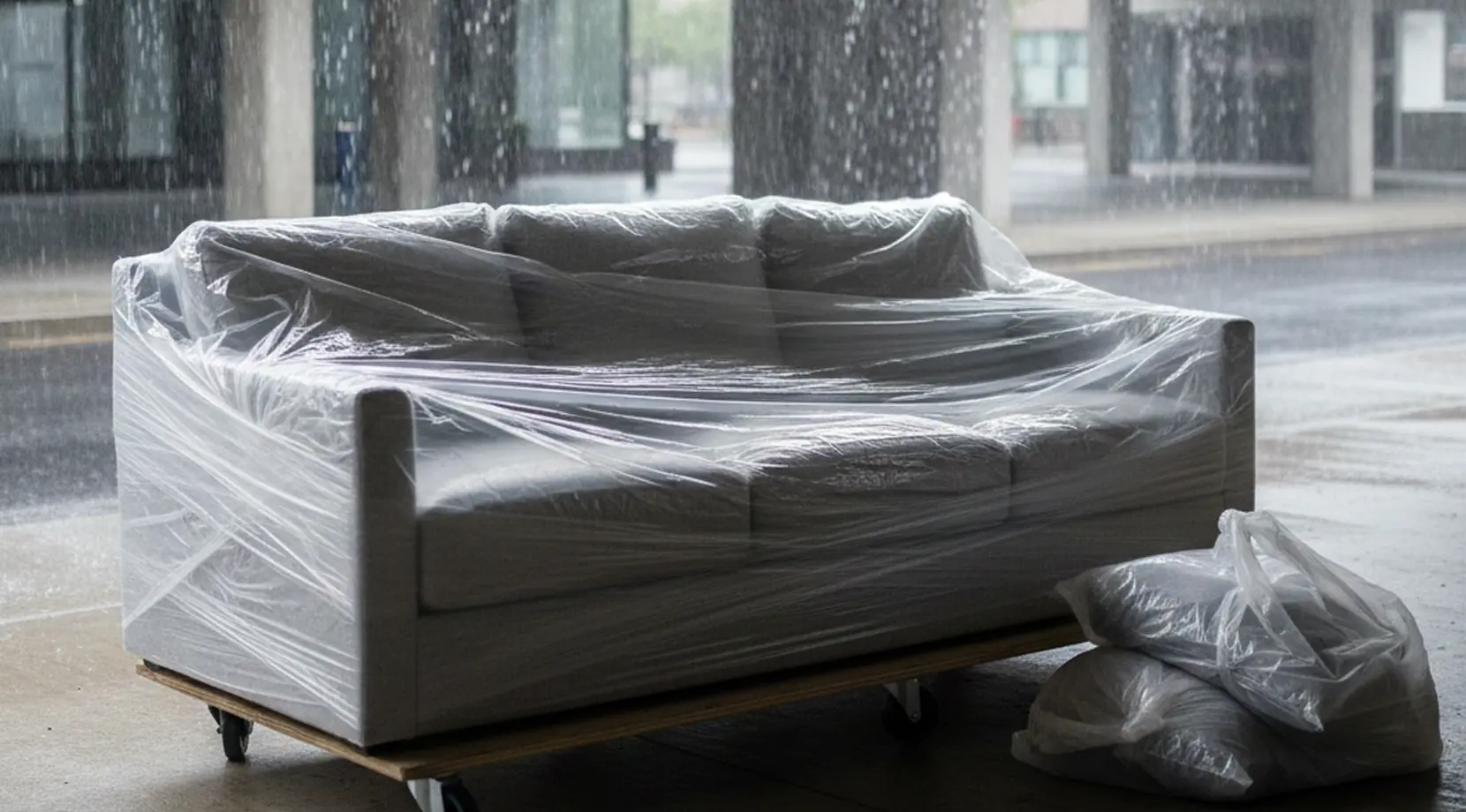
The rule for moving furniture in the rain is plastic first, padding after. Plastic blocks water. Blankets block scratches, but they can also hold moisture against fabric and wood.
Before you lift, check the route and remove the worst slip points. If you have a long driveway or a slick tile lobby, shorten exposure by staging under cover, then doing one fast push to the truck. When moving in the rain, keep a towel in the truck to wipe the ramp and avoid a wet floor that transfers moisture to upholstery.
Moving a Couch in the Rain
For moving a couch in the rain, remove cushions and bag them. Wrap the couch in plastic sheeting or stretch wrap, then tape the plastic to itself. Avoid setting the couch down outside. If you need to pause, pause under cover. In the truck, keep it off the wet floor and strap it so it does not shift.
Moving a Mattress in the Rain
A mattress is a mold-risk item, so moving a mattress in the rain needs a mattress bag. Bag it before it goes outside, tape the opening shut, and carry it on its side to reduce exposure.
If it gets damp, do not keep it sealed for hours. Open the bag at the new place, pat it dry, and run airflow on it. During moving in the rain, airflow is your best tool for preventing lingering odor and moisture.
Vancouver Move-Day Logistics in Wet Weather
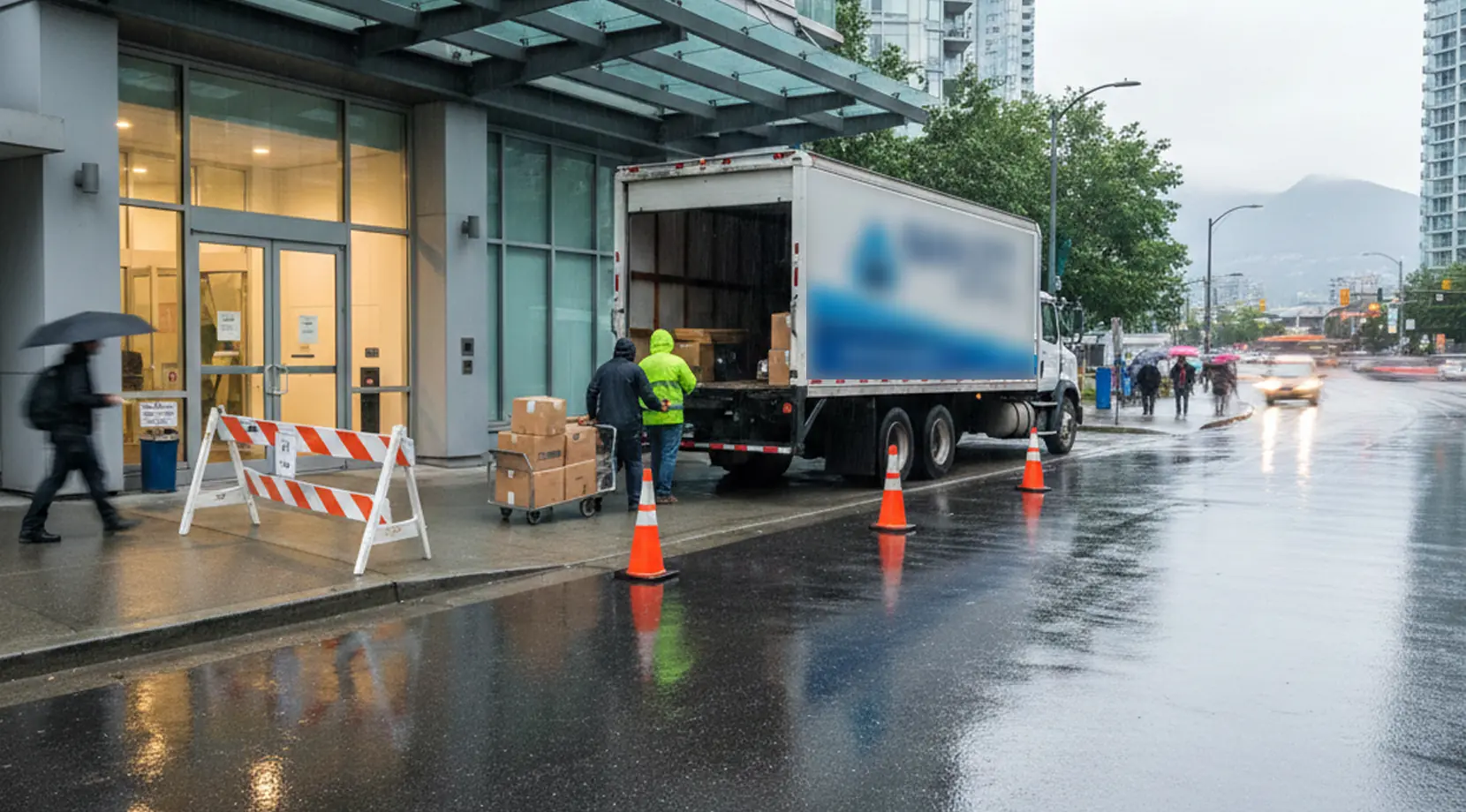
In Vancouver, moving in the rain gets harder when the truck cannot park close. Longer carry distance means more soaking risk, more floor mess, and more fatigue. Plan the curb space as part of the move, not as an afterthought.
If you need a reserved truck spot near your building, use the City of Vancouver process for reserving metered spaces. The City asks for 7 to 10 business days after payment to process and post signs, so plan early.
Also, confirm loading bay rules, elevator bookings, and protective mats with your building. The same logic applies in other cities: shorten the legal distance, stage inside, and keep the truck door closed between runs.
After You Arrive: Dry-Out and Damage Check
Give yourself a “dry-out hour.” Put towels at the entry, wipe down big items, and swap wet runners for dry ones so you are not tracking water through the whole place. When moving in the rain, the first hour after arrival decides if you end up with damp smells later.
If anything got wet, park it in a quarantine corner near airflow. Open soft or soggy boxes first so moisture does not stay trapped. Take quick photos of damage or water exposure while it is fresh. For a clear overview of how responsibility and claims usually work, read Are Moving Companies Responsible for Damage?.
Get a Free Quote from Secure Moving
Moving in the rain is easier with a crew that plans for Vancouver conditions. Secure Moving has 15+ years of experience across Greater Vancouver and beyond, with full-time trained crews, licensed and insured service, and clear written quotes with no surprise charges.
We bring protection built for wet days, including floor runners, door and corner guards, clean moving blankets, shrink wrap, tie-downs, and mattress bags. Optional packing, storage, and cleaning are available if you want fewer moving parts to juggle.
Get a free quote from Secure Moving!, the most prepared moving company in Vancouver today!
